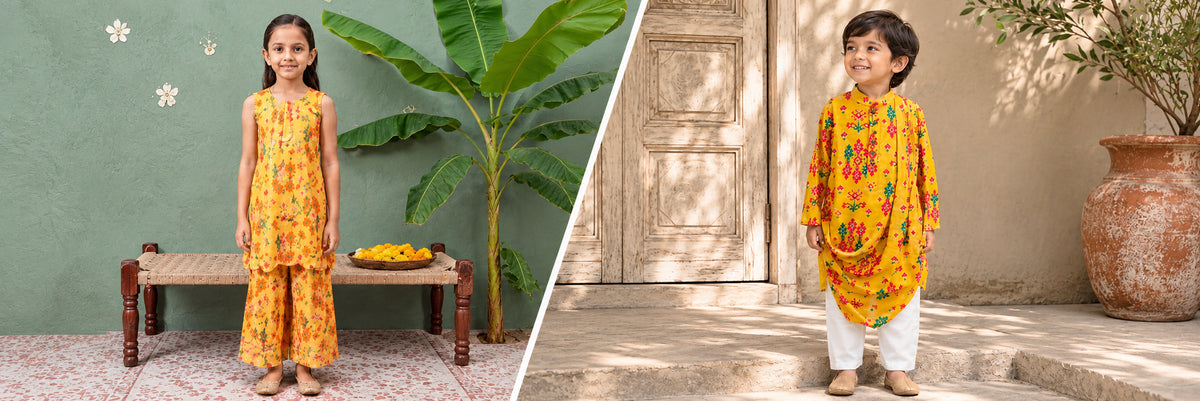
Hypoallergenic Traditional Clothes for Kids With Sensitive Skin or Eczema
Every parent knows the moment.
A beautiful outfit arrives.
The colours are perfect. The embroidery is stunning.
And within an hour of wearing it, your child is scratching, fidgeting, or breaking out in a rash.
For children with sensitive skin or eczema, festive clothing often comes with an unspoken worry.
Will this outfit feel as good as it looks?
Or will it leave behind redness, irritation, and a cranky child by the end of the celebration?
The good news is that beautiful traditional wear and gentle, skin-friendly fabric are not opposites.
They can exist in the same outfit.
Parents simply need to know what to look for.
Why Sensitive Skin Needs a Closer Look at Fabric
Children's skin is thinner and more reactive than adult skin.
For children with eczema, this sensitivity is even more pronounced. Rough textures, synthetic blends, and harsh dyes can trigger flare-ups that turn an exciting celebration into an uncomfortable one.
Traditional wear, with its embroidery, embellishments, and layered fabrics, can sometimes be harder on sensitive skin than everyday clothing. That doesn't mean festive outfits are off the table.
It simply means fabric choice matters more than usual.
What Hypoallergenic Really Means for Kids' Clothing
The word hypoallergenic often gets used loosely.
For children's clothing, it generally means fabric that is less likely to trigger irritation, itching, or allergic reactions. This usually comes down to a few things.
Natural fibres instead of synthetic ones.
Breathable weaves instead of tightly sealed ones.
Minimal use of harsh chemical dyes and finishes.
An outfit that ticks these boxes is far more likely to feel gentle against sensitive or eczema-prone skin, even during a long day of celebrations. This matters just as much in hypoallergenic traditional Indian clothing for kids as it does in everyday wear, since festive fabrics tend to carry more layers, more dye, and more detailing than a regular outfit.
The Fabrics That Tend to Work Best
Cotton remains one of the safest choices for children with sensitive skin.
It is breathable, soft, and generally well tolerated, especially when used as a lining beneath more decorative outer fabrics. A child can enjoy an embroidered jacket or a detailed lehenga on the outside, while the inner layer touching their skin stays soft and cotton-based.
Muslin and lightweight cotton blends work well too, particularly for babies and toddlers, since they allow air to pass through and reduce the chances of overheating or sweating, which can worsen eczema symptoms.
Silk, while beautiful, can sometimes feel rougher against very sensitive skin unless it is soft-spun or paired with a gentle lining. For children prone to flare-ups, a cotton-lined silk-look fabric often offers the best of both worlds. When parents ask about the best fabrics for a child with eczema, the answer usually comes back to this same shortlist: cotton, muslin, and soft-spun natural blends over anything synthetic or stiffly finished.
Why Embroidery and Embellishments Need Extra Thought
Festive outfits often shine because of their detailing.
Sequins, zari work, and heavy embroidery look stunning in photographs, but they can also sit directly against a child's skin if the outfit isn't constructed thoughtfully.
For children with eczema, embellishments placed away from high-friction areas, like the underarms, neck, and inner arms, make a noticeable difference. A well-designed outfit places decorative work on the outer layer while keeping the inner lining smooth and simple.
Beautiful detailing and comfortable wear aren't mutually exclusive.
They just need to be planned that way from the start.
Dyes and Finishes Matter as Much as the Fabric Itself
Many parents focus entirely on fabric type and overlook dyes.
Harsh chemical dyes and stiff finishing treatments can sometimes cause just as much irritation as a rough fabric. This is particularly true for deep, vibrant colours often used in festive wear, which may require stronger dyeing processes.
Choosing outfits made with skin-friendly dyeing practices, and washing new clothes before the first wear, can help reduce the risk of irritation for children with sensitive or eczema-prone skin.
A little extra care before the celebration can prevent a lot of discomfort during it.
Comfort During Long Celebrations
Festive days are rarely short.
Weddings, poojas, and family functions can stretch across several hours, sometimes longer. For a child with sensitive skin, that means more time for any irritation to build.
Choosing breathable, gentle fabric isn't just about avoiding an immediate reaction. It's about making sure your child stays comfortable from the first photograph to the last dance of the evening.
A child who isn't distracted by itching or discomfort is a child who can simply enjoy the day.
What to Keep in Mind Before You Buy
A few simple checks can help parents choose more confidently.
Look for cotton or muslin linings, especially in outfits with embroidery or embellishment. Check where decorative work is placed, and whether it sits away from areas prone to friction. Read product descriptions for fabric composition rather than relying on how an outfit looks in photographs alone.
When possible, choose brands that are transparent about their fabric sourcing and construction, since that transparency often reflects a genuine focus on comfort, not just design.
The most beautiful outfit is still the one your child can wear without discomfort.
A Little Note for Parents
Dear Parents,
Sensitive skin and eczema should never mean giving up on beautiful festive wear for your child. It simply means choosing a little more carefully, looking beyond the embroidery to what actually touches your child's skin. A soft cotton lining, a thoughtfully placed embellishment, and a gentle dye can make all the difference between a day of discomfort and a day of joy. Celebrate fully, and let your child celebrate comfortably too.
-
P&S Co